TSAR NICHOLAS II’S AEROPLANE MAKER: IGOR SIKORSKY (1889 – 1972)
TSAR NICHOLAS II’S AEROPLANE MAKER: IGOR SIKORSKY (1889 – 1972)

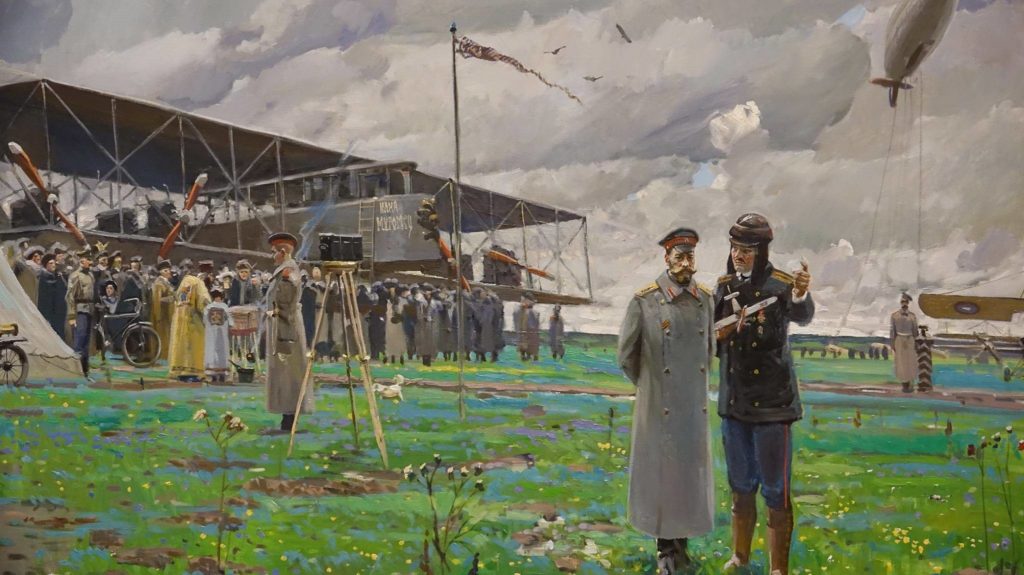
Nicholas II and Igor Sikorsky

Born in Kiev (Russian Empire) on May 25, 1889, world famous Russian aircraft engineer, inventor and philosopher Igor Ivanovich Sikorsky was the youngest child of a well-known psychiatrist, professor of the University of Kiev – Ivan Sikorsky and his wife Maria, nee Temryuk-Cherkasova.

From 1903 to 1906 Igor studied at the St. Petersburg Naval Academy. In 1907 he entered the Kiev Polytechnic Institute, where he joined the “Aeronautics Mechanical Circle”.  In the next few years, Sikorsky built his first two simple coaxial helicopters. The capacity of the unit built in 1909 reached 9 pounds, and was presented at a two-day aeronautic exhibition in Kiev later that year. None of helicopters built until this point could take off with a pilot, so Sikorsky switched to building airplanes.  In January 1910 he tested an aero-sleigh of own design and also flew the first plane of his construction: C-2. The following year he received his pilot license.

Read more TSAR NICHOLAS II’S AEROPLANE MAKER: IGOR SIKORSKY (1889 – 1972)

Facebooktwitterpinteresttumblrmail

ROMANOV FAMILY REMAINS UPDATE: EXHUMATION OF TSAR ALEXANDER III?

ROMANOV FAMILY REMAINS UPDATE: EXHUMATION OF TSAR ALEXANDER III?

There is now a possibility of exhumation of the remains of Tsar Alexander III in order to have a “more accurate data” for the study of the Romanov family remains, in particular those of Tsarevich Alexei, Grand Duchess Maria, Tsar Nicholas II and Empress Alexandra Feodorovna.

“To remove the last doubts” about the authenticity of the remains of the Romanov family, the Patriarch of Moscow and All the Russia offered to open the tomb of Alexander III, at a meeting of the Committee for the Reburial of the Romanovs. Currently this issue is being addressed by the Investigative Committee of Russia. Read more ROMANOV FAMILY REMAINS UPDATE: EXHUMATION OF TSAR ALEXANDER III?

Facebooktwitterpinteresttumblrmail

ROMANOV FAMILY FRIEND: MARGARITA KHITROVO

ROMANOV FAMILY FRIEND: MARGARITA KHITROVO

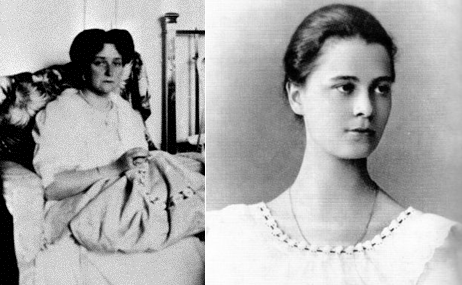
One of the last letters Empress Alexandra wrote from captivity was to the Romanov family friend Margarita “Rita” Khitrovo.
Empress Alexandra and Margarita "Rita" Khitrovo, a Romanov family friend.
Empress Alexandra and Margarita “Rita” Khitrovo, a Romanov family friend.

Read more ROMANOV FAMILY FRIEND: MARGARITA KHITROVO

Facebooktwitterpinteresttumblrmail

ROMANOV FAMILY: EMPRESS ALEXANDRA DOLL

ROMANOV FAMILY: EMPRESS ALEXANDRA DOLL

As some of you may know, I am a big fan of historical dolls – especially (surprise!) the Romanov family dolls – and although I don’t find the resemblance of this Empress Alexandra doll to be  particularly strong,  I still think it’s pretty and well made. Read more ROMANOV FAMILY: EMPRESS ALEXANDRA DOLL

Facebooktwitterpinteresttumblrmail

ROMANOV FAMILY: BOOKS THEY LEFT BEHIND (EKATERINBURG)

ROMANOV FAMILY: BOOKS THEY LEFT BEHIND (EKATERINBURG)

As a librarian, of course this topic is of great interest to me: which books did the Romanov family bring into exile with them and what did they read during their dreary days of captivity? About 10 years ago, in 2005, I was very fortunate to have the chance to work with the Romanov family books directly – when I did an internship at the Rare Book Department of The Tsarskoe Selo Museum. Their collection consisted of numerous books, many of which had inscriptions of the Romanov family members in them. I will do another story on those later! Read more ROMANOV FAMILY: BOOKS THEY LEFT BEHIND (EKATERINBURG)

Facebooktwitterpinteresttumblrmail

ROMANOV FAMILY: INSIDE IMPERIAL TRAIN

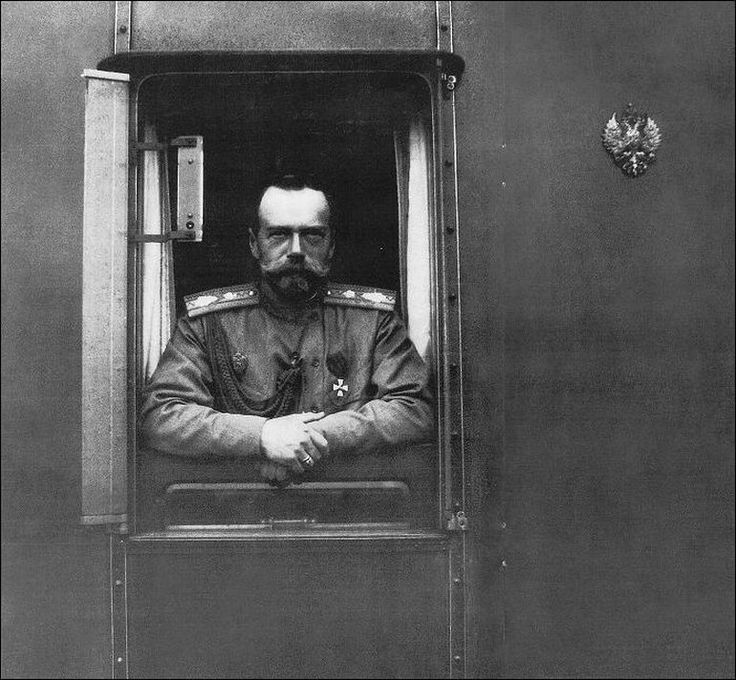
Tsar Nicholas II looking out of the window of the Romanov family imperial train
Tsar Nicholas II looking out of the window of  imperial train


The Domestic Imperial Train of Nicholas II (there was also an Imperial train exclusively for international travel) was built between 1894-96 in the main Car Workshops of the Nikolaevsky Railway Company. The train was adapted and expanded throughout his reign as the family grew and needs increased.

The Imperial train was immortalized by Fabergé as the surprise of the “Trans-Siberian Railway Egg” of 1900.


By 1902, the train consisted of ten carriages: a sleeping-car for the Emperor and Empress, a saloon car, a kitchen, a dining car, carriages intended for the grand dukes and other family, the children’s car, cars for the Emperor’s retinue, as well as cars for railway servicemen, servants, luggage and workshops. The final and eleventh car, a fully dedicated chapel, was consecrated in 1899. Read more ROMANOV FAMILY: INSIDE IMPERIAL TRAIN

Facebooktwitterpinteresttumblrmail